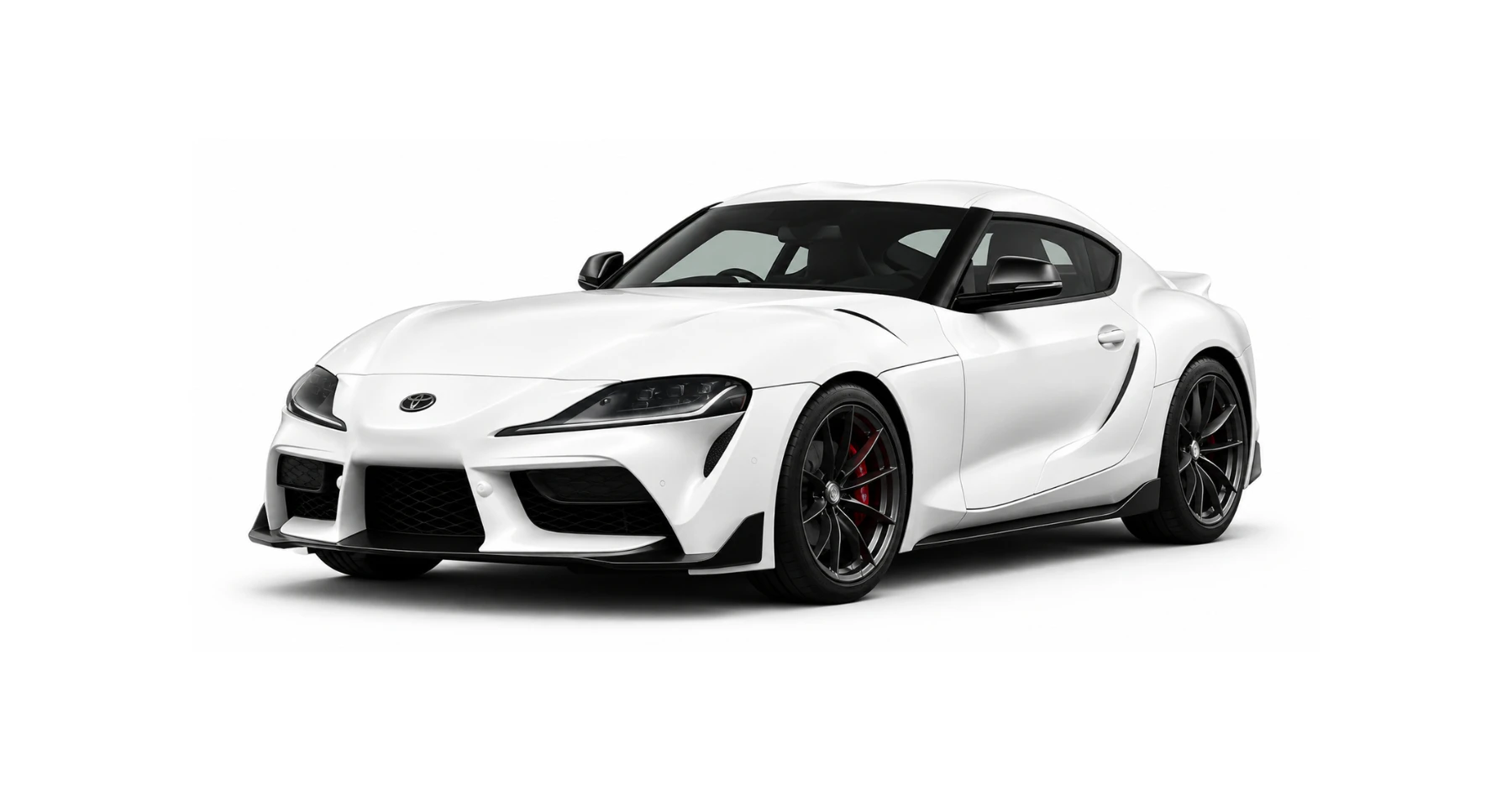
Toyota Supra Import Ireland: Buyer's Guide 


The twin-turbo A70, 2JZ-powered A80 and modern GR Supra, explored through their Japanese specifications.

Explore Japanese A70, A80 and DB-series Supras, from the 1G, 7M and JZ engines to the modern B58, including factory grades, special editions and Irish import costs.

The Toyota Supra name didn't appear in Japanese showrooms until February 1986, although the car's roots go back considerably further. In 1978, Toyota introduced the Celica XX A40, a longer, six-cylinder version of the Celica that became known overseas as the Celica Supra. The sharper A60 followed in 1981, introducing pop-up headlights and increasingly sophisticated straight-six engines, including turbocharged and Twin Cam 24 versions. Both generations were sold in Japan as the Celica XX, but they established the long-bonnet, rear-wheel-drive formula that would define the Supra. When the A70 arrived in February 1986, Toyota finally separated the model from the Celica and introduced the Supra name to Japanese buyers. The original range included 2.0-litre 1G engines and the turbocharged 3.0-litre 7M-GTE, followed by the 2.5-litre twin-turbo 1JZ-GTE in 1990. The A70 had become a serious performance grand tourer, with considerably more engineering behind it than its Celica XX predecessors.


The JZA80, introduced in May 1993, took the Supra in a much more focused direction. Its shorter, wider body housed Toyota's 3.0-litre 2JZ engine family, with the naturally aspirated 2JZ-GE in the SZ grades and the legendary twin-turbo 2JZ-GTE in the GZ, RZ and later RZ-S. Six-speed manual transmissions, substantial chassis development and increasingly specialised factory equipment helped establish the A80's reputation long before its current collector status. Following its departure in 2002, Japan waited almost 17 years for another Supra. The DB-series GR Supra finally arrived in May 2019, developed in cooperation with BMW and offering B48 four-cylinder and B58 straight-six engines. Later revisions introduced a six-speed manual RZ, improved chassis tuning and special editions including the Plasma Orange 100 Edition and A90 Final Edition. This guide covers the three generations officially sold in Japan under the Supra name, exploring their engines, original grades, technical developments and the considerations involved in importing one into Ireland.

The Evolution of the Toyota Supra


From the Celica XX and Toyota's early twin-cam straight-sixes to the 2JZ era and modern GR Supra

The Supra's straight-six heritage can be traced back to the original Celica XX, introduced in Japan in April 1978. Developed from the Celica Liftback, the A40 featured a longer wheelbase to accommodate six-cylinder engines, giving it a stronger emphasis on smooth performance and long-distance comfort than outright speed. The original Japanese range offered 2.0-litre M-EU and 2.6-litre 4M-EU engines, establishing the front-engined, rear-wheel-drive arrangement that would become central to the Supra's identity.

The A60 Celica XX arrived in July 1981, bringing sharper styling, pop-up headlights and a more sophisticated engine range. The 2.8-litre 5M-GEU gave the car greater performance, while the later 2.0-litre 1G-GEU introduced Toyota's Twin Cam 24 technology. Turbocharging also entered the Japanese Celica XX range. These cars were becoming increasingly capable grand tourers, but Toyota still considered them part of the Celica family.

That changed in February 1986. The A70 was the first car officially sold as a Supra in Japan, arriving just as the regular Celica was moving to front-wheel drive. Toyota retained the long bonnet, rear-wheel drive and straight-six engines, but developed a dedicated chassis with double-wishbone suspension at all four corners. Japanese buyers could choose 2.0-litre naturally aspirated and twin-turbo engines, while the 3.0GT Turbo used the 230 PS 7M-GTE. The A70 was a substantial car, with the equipment and refinement of a grand tourer but increasingly serious performance beneath its bodywork.

Toyota kept developing the A70. The 1988 3.0GT Turbo A, limited to 500 examples, received a 270 PS version of the 7M-GTE and was created with Group A competition in mind. Then, in August 1990, the new 2.5-litre 1JZ-GTE arrived. Its ceramic twin-turbochargers helped produce 280 PS, while the 2.5GT Twin Turbo R added Recaro seats, Bilstein dampers and a Torsen limited-slip differential. By this point, the A70 had moved a long way beyond its Celica XX origins.


May 1993 brought the JZA80 and an entirely different approach. Toyota shortened the body and wheelbase, widened the track and developed a more focused sports car around its new 3.0-litre 2JZ engine family. The naturally aspirated 2JZ-GE produced 225 PS, while the sequentially turbocharged 2JZ-GTE delivered 280 PS in Japanese specification. The RZ received a Getrag six-speed manual, while the GZ offered the same turbocharged performance with a more luxurious specification.

The A80's reputation grew well beyond its original showroom life. Its strong 2JZ-GTE engine became a favourite among tuners, while the Supra's involvement in Japanese GT racing gave it an entirely different following. Yet the original factory cars were carefully developed machines in their own right, with substantial brakes, double-wishbone suspension and a chassis designed to make use of the engine's considerable torque. Japanese production ended in 2002, leaving the Supra name absent for almost 17 years.

When the GR Supra returned in May 2019, Toyota took an unusual route. Developed in cooperation with BMW and built in Austria, the DB series used a compact two-seat body, a shorter wheelbase and modern turbocharged engines. Japanese buyers could choose the 2.0-litre B48 in SZ and SZ-R grades or the 3.0-litre B58 straight-six in RZ. The original 340 PS RZ gained an increase to 387 PS in 2020, followed by a six-speed manual option in 2022.

Toyota continued refining the GR Supra through chassis, suspension and braking changes. The A90 Final Edition went on sale in Japan in March 2025, with 150 cars allocated to the domestic market. Its revised B58 produced 441 PS and 571 Nm, alongside adjustable KW suspension, larger Brembo brakes and additional chassis reinforcement.

Across nearly five decades, the Supra changed from a comfortable six-cylinder Celica derivative into the JZ-powered performance car of the 1990s and eventually a compact modern sports coupe. The engines, dimensions and technology changed dramatically, but Toyota repeatedly returned to the same basic ingredients: a straight-six up front, power delivered to the rear wheels and a chassis capable of handling considerably more than ordinary road use.

Toyota Supra 70 Series

Toyota Supra 70 Series (February 1986 – May 1993)


The original Japanese Supra, from 1G twin-turbo straight-sixes and the 7M-GTE to the 280 PS JZA70 Twin Turbo R

The A70 was the first Toyota officially sold as a Supra in Japan, arriving on 6 February 1986 after two generations of Celica XX. It kept the long bonnet, pop-up headlights and straight-six character of its predecessors, but underneath was a considerably more sophisticated car. Toyota gave the Supra independent double-wishbone suspension at all four corners, a substantial three-door liftback body and an interior filled with the electronic technology that defined Japan's high-performance grand tourers of the late 1980s. The A70 was never intended to be a lightweight sports car. It combined performance with the refinement, equipment and motorway ability expected from Toyota's flagship sporting coupe.

The original Japanese engine range was unusually broad. The GA70 could be ordered with a modest 2.0-litre 1G-EU, a naturally aspirated 1G-GEU Twin Cam 24 or the twin-turbocharged 1G-GTEU, while the MA70 introduced the 3.0-litre 7M-GTEU with 230 PS. Toyota also offered features such as TEMS electronically controlled suspension, a panoramic digital instrument display and the removable Aero Top roof. 

The wide-body 3.0GT Turbo Limited followed in 1987, and the substantial August 1988 revision brought updated styling, stronger engines and the extraordinary 500-car 3.0GT Turbo A, developed with Group A racing in mind.

Then came the engine that changed the A70's reputation. In August 1990, Toyota replaced the 3.0-litre turbo flagship with a new family of 2.5-litre twin-turbo models powered by the 1JZ-GTE. The JZA70 produced 280 PS and introduced a lighter, more responsive straight-six developed with ceramic turbochargers and Toyota's new direct ignition system. At the top of the sporting range sat the 2.5GT Twin Turbo R, complete with Bilstein dampers, Recaro seats, a Torsen limited-slip differential and MOMO controls. Its combination of factory performance equipment and the original twin-turbo 1JZ has since made it one of the most desirable versions of the A70.

Japanese production ended in May 1993, just before the JZA80 took over. By the end of Japanese production in May 1993, the A70 range had changed considerably. Early GA70 models, 7M-powered MA70s and later JZA70 Twin Turbo Rs differ in engine design, body specifications, suspension equipment and performance. These differences also affect maintenance requirements, parts availability and the cost of returning a modified example to its original specification.


Current Japanese Retail Price: Around ¥1.7 million–¥8 million+ (approximately €9,700–€45,400+ / $10,600–$50,100+). Japanese A70 prices cover an unusually broad market. At the lower end are higher-mileage GA70 models, cars with previous modifications and examples requiring substantial mechanical or cosmetic attention. Original MA70 turbo models, well-preserved Aero Tops and factory-manual JZA70s generally attract stronger prices. The 2.5GT Twin Turbo R and genuine Turbo A occupy a different part of the market, with exceptional or collector-grade examples sometimes advertised far above the ordinary range. Recent Japanese listings have extended beyond ¥15 million for particularly expensive examples. These are retail asking prices in Japan, not auction results or Irish landed costs.

Import cost considerations: Every Japanese A70 Supra has now passed the 30-year threshold, making qualifying examples eligible for Ireland's €200 vintage VRT rate. However, Japanese purchase prices still exclude inland transport, export documentation, shipping, marine insurance, customs duty, Irish VAT and registration expenses. A car's original chassis code, engine and transmission should be established before obtaining an import quotation, particularly where it has undergone a 1JZ conversion or substantial restoration. The cost of replacing missing factory components, repairing corrosion or recommissioning an older turbocharged engine can also be significant.

Engine output:

  • 1G-EU 2.0-litre SOHC straight-six: 105 PS
  • 1G-FE 2.0-litre DOHC straight-six: 135 PS
  • 1G-GEU 2.0-litre Twin Cam 24 straight-six: 140 PS initially, later 150 PS
  • 1G-GTEU 2.0-litre twin-turbo straight-six: 185 PS initially, later 210 PS
  • 7M-GTEU 3.0-litre turbocharged straight-six: 230 PS initially, later 240 PS
  • 7M-GTEU 3.0GT Turbo A: 270 PS
  • 1JZ-GTE 2.5-litre twin-turbo straight-six: 280 PS / 363 Nm

Engine: Every Japanese A70 Supra used a longitudinally mounted petrol straight-six. The 1,988 cc 1G family covered naturally aspirated SOHC and DOHC engines, including the 24-valve 1G-GEU and twin-turbocharged 1G-GTEU. The MA70 used the larger 2,954 cc 7M-GTEU, combining a single turbocharger, intercooler and DOHC 24-valve cylinder head. From August 1990, the JZA70 introduced the 2,491 cc 1JZ-GTE with two ceramic turbochargers, electronic fuel injection and distributorless ignition. The 1JZ was not simply a smaller version of the 7M. It belonged to Toyota's newer JZ engine family, with substantially different internal construction and engine-management technology.

Best for: Enthusiasts attracted to Toyota's 1980s and early-1990s straight-six performance cars. The 1G-powered GA70 offers a more traditional grand-touring experience, while the MA70 appeals to those interested in the original 7M-GTE turbo. The JZA70 Twin Turbo R suits drivers specifically seeking the factory twin-turbo 1JZ, manual transmission and Toyota's more specialised suspension equipment.

Body style: Three-door, five-seat liftback coupe with a large rear hatch and folding rear seats. The original Japanese A70 measured 4,620 mm long, 1,690 mm wide and 1,310 mm high, with a 2,595 mm wheelbase. Wide-body versions increased overall width to approximately 1,745 mm through wider blister-style wings. The removable Aero Top roof became available in June 1986, with additional body reinforcement to compensate for the missing fixed roof section. Although officially a five-seater, the rear cabin is better suited to occasional passengers than regular adult use. 

Drive: Rear-wheel drive throughout Japanese production, with the engine mounted longitudinally ahead of the passenger compartment. Toyota used independent double-wishbone suspension at all four corners, including forged aluminium upper control arms in the original design. TEMS electronically controlled suspension was fitted or available on selected specifications, allowing the damping characteristics to change according to driving conditions. Differential equipment varied considerably, from conventional arrangements on lower grades to the Torsen limited-slip differential fitted to the later Twin Turbo R. The wide-body models also received different wheel and tyre specifications from the original narrow-body cars.

Transmission: Five-speed manual and four-speed automatic transmissions were offered across the Japanese range, although availability differed by engine and production period. The original 3.0GT Turbo launched with an electronically controlled automatic, with a manual added later. The 1G-powered cars used different manual transmissions according to engine output, while the higher-torque turbocharged models required stronger drivetrain components. The JZA70 2.5GT Twin Turbo range offered both five-speed manual and four-speed automatic configurations, including the Twin Turbo R. The R154 five-speed manual is particularly associated with the 1JZ-GTE models and remains one of the most desirable factory gearboxes in the A70 range.

Notable features: First Supra officially sold under that name in Japan, four-wheel double-wishbone suspension, 1G twin-turbo and 7M-GTE engines, optional panoramic digital instruments, TEMS suspension and removable Aero Top roof. Significant developments included the wide-body MA70, the 1988 facelift, 270 PS Turbo A, 300-car Black Supra, 1990 introduction of the 280 PS 1JZ-GTE and the Twin Turbo R's Bilstein dampers, Recaro seats and Torsen differential.


The A70's three engine families tell three very different stories

The A70 is often remembered as the Supra that came before the 2JZ, but that description overlooks just how much Toyota changed the car during its seven-year production run.

The early 1G-powered models belonged to a distinctly Japanese tradition of high-revving 2.0-litre straight-sixes. The naturally aspirated 1G-GEU developed its power progressively, while the twin-turbocharged 1G-GTEU used two relatively small turbochargers to improve performance without exceeding 2.0 litres. These cars offered the smoothness and mechanical character of a six-cylinder engine in the narrower GA70 body.

The MA70 took a different approach. Its 7M-GTEU produced substantially more torque from its 3.0-litre capacity, giving the Supra the effortless acceleration expected from a larger grand tourer. The engine became closely associated with the original A70 performance range, although its cylinder-head gasket and cooling-system history deserve attention on surviving examples.

Toyota then introduced the 1JZ-GTE in 1990, and the character changed again. The new engine produced 280 PS from 2.5 litres, using ceramic twin turbochargers, a more modern cylinder-head design and distributorless ignition. The JZA70 retained the familiar A70 body, but its engine belonged to the same JZ family that would later become central to Toyota's performance reputation.

The chassis code is therefore a useful starting point when researching one in Japan. GA70 identifies the 2.0-litre family, GA70H the wider 2.0-litre body, MA70 the 3.0-litre cars and JZA70 the factory 2.5-litre twin-turbo range.

It is also worth remembering that engine conversions are common. A GA70 fitted with a 1JZ-GTE may offer excellent performance, but it is not an original JZA70. The distinction becomes particularly relevant when factory authenticity, insurance, restoration costs and long-term collector interest are part of the purchase decision.


Japanese Toyota Supra 70 Series grades

The Japanese A70 range was considerably broader than its performance reputation might suggest. Toyota originally offered S and G as straightforward 2.0-litre models, GT with the naturally aspirated Twin Cam 24 engine, GT Twin Turbo with the 1G-GTEU and the flagship 3.0GT Turbo with its larger 7M-GTEU.

The hierarchy became more complicated as Toyota introduced wide-body versions, Electronics specifications and additional equipment packages. These names are not interchangeable. 

A GT Twin Turbo Electronics model retained the same basic engine as the regular GT Twin Turbo, while a Wide Body version introduced genuine changes to the body dimensions and chassis specification. 

The 1988 facelift and subsequent range changes also brought revised naming. Earlier GT and GT Twin Turbo models were increasingly identified as 2.0GT and 2.0GT Twin Turbo, while the August 1990 introduction of the 1JZ-GTE established the new 2.5GT Twin Turbo range.

Special editions deserve separate attention. The 300-car Black Supra was based on the 1G-powered GT Twin Turbo, while the 500-car Turbo A was developed from the 7M-powered 3.0GT Turbo for a very different purpose.


S

S was the most affordable Japanese Supra when the A70 arrived in February 1986. It used the GA70 chassis with Toyota's 1,988 cc 1G-EU SOHC straight-six, producing 105 PS. Five-speed manual and four-speed automatic transmissions were available, with rear-wheel drive and the same fundamental double-wishbone suspension arrangement as the more powerful cars. Equipment was deliberately straightforward, particularly compared with the electronically equipped GT Twin Turbo and luxurious 3.0GT Turbo.

The S is a reminder that the A70 was originally sold as much more than a turbocharged performance car. Toyota wanted a broad range, and the entry-level version allowed customers to enjoy the Supra's styling and straight-six refinement without paying for the most expensive engines. Today, an original S is unusual mainly because these cars received relatively little attention from collectors. Surviving examples are worth examining for their factory interior, original 1G-EU engine and evidence of later conversions. An S fitted with a 1JZ may be an entertaining project, but its original specification is part of its history.


G 

G was positioned above S in the original Japanese A70 range, initially using the 105 PS 1G-EU 2.0-litre straight-six. Later G specifications adopted the 135 PS 1G-FE, making the production period important when identifying the original engine. Manual and automatic transmissions were available. The difference was primarily equipment, with G receiving a more generous specification than the entry-level car while remaining below the DOHC-powered GT.

Although G lacked the performance of the Twin Cam 24 or turbocharged models, it retained the A70's long-distance character. The straight-six was smooth, the cabin was more comprehensively equipped than S, and the double-wishbone suspension gave the car a more sophisticated chassis than its modest engine output might suggest. The G name belongs principally to the earlier range, before Toyota's later engine and grade revisions. Its originality can be difficult to establish because many surviving GA70s have received engine swaps, later bumpers or interior modifications.


GT

GT was the first naturally aspirated performance grade of the Japanese A70. Introduced in February 1986, it used Toyota's 1,988 cc 1G-GEU DOHC 24-valve straight-six, initially producing 140 PS. The engine was considerably more sophisticated than the SOHC 1G-EU in S and G, with twin overhead camshafts and four valves per cylinder. Five-speed manual and electronically controlled automatic transmissions were offered.

The appeal of the original GT lies in its naturally aspirated six-cylinder character. The 1G-GEU was designed to work at higher engine speeds, giving the car a different response from the turbocharged versions. Toyota improved the engine during production, with later specifications reaching 150 PS. A well-preserved manual GT offers an interesting alternative to a modified twin-turbo car, particularly for enthusiasts who enjoy the original 1G engine family. Its factory specification should be established through the production date and engine code rather than exterior GT badging alone.


GT Twin Turbo

GT Twin Turbo introduced one of the most interesting engines in the original Japanese A70 range. Its 1,988 cc 1G-GTEU combined DOHC 24-valve construction with two turbochargers and intercooling, producing 185 PS when the Supra launched in February 1986. The engine was paired with rear-wheel drive and offered with five-speed manual or electronically controlled four-speed automatic transmission.

For the mid-1980s, the idea of a 2.0-litre twin-turbo straight-six was an ambitious one. Toyota used smaller turbochargers to deliver stronger performance without relying on the larger displacement of the 7M-GTE. The GT Twin Turbo retained the standard narrow-body dimensions at launch, giving it a more understated appearance than the later wide-body cars. Its equipment and engine specification changed substantially during the A70's production life, eventually reaching 210 PS. The original turbocharger arrangement and associated pipework are particularly interesting to preserve, as many surviving examples have been converted to single-turbo systems.


GT Twin Turbo Electronics

GT Twin Turbo Electronics was a factory equipment specification built around the original 1G-GTEU-powered GT Twin Turbo. It retained the 185 PS twin-turbo straight-six in its launch configuration, but added some of Toyota's most distinctive 1980s technology. The package combined the Panoramic Digital Meter instrument display, TEMS electronically controlled suspension and Toyota's Sound Flaver audio system.

This is one of the grades that best captures the technology Toyota was experimenting with during the period. The digital instruments gave the cockpit a very different appearance from the conventional analogue dashboard, while TEMS added electronically controlled damping to the already sophisticated double-wishbone chassis. None of this increased engine output, but it made the car considerably more advanced in equipment. Original digital instrument clusters, associated sensors, electronic suspension components and interior controls deserve careful inspection because replacement parts can be difficult to source. A standard GT Twin Turbo fitted with a digital dashboard is not automatically an original Electronics specification.


GT Twin Turbo Wide

GT Twin Turbo Wide belonged to the later 1G-GTEU range, when Toyota extended the wider-body treatment beyond the original 3.0-litre cars. It combined the 2.0-litre twin-turbo engine with the more substantial blister-style wings and wider stance associated with the upper A70 specifications. The engine retained the 1G-GTEU architecture, with later Japanese models producing 210 PS.

The appeal of the Wide specification is its combination of the smaller twin-turbo engine and the more muscular A70 body. These cars are visually closer to the 3.0GT Turbo and later JZA70 models than the original narrow-body GA70. The distinction is more than cosmetic, as the wider body was accompanied by different wheel and tyre fitments. Toyota subsequently used the GA70H chassis designation for the wide-body 2.0-litre models. An ordinary GA70 fitted with aftermarket wide wings should not be confused with an original wide-body car.


GT Twin Turbo Wide Electronics

GT Twin Turbo Wide Electronics brought the higher-equipment Electronics specification to the wider 1G-GTEU-powered body. It combined the twin-turbo straight-six with the factory blister-style wings and the electronic equipment associated with the earlier Electronics package. Depending on production period, that equipment included the Panoramic Digital Meter and TEMS suspension system.

Its attraction is the combination of period Toyota technology and the later wide-body appearance. The distinctive dashboard and electronic suspension controls make it one of the more complicated GA70 specifications to restore correctly. Originality is particularly relevant where a car has received a later interior, conventional dampers or replacement instrument components. These changes may improve everyday usability, but they can remove the features that made an Electronics model distinctive. The exact catalogue designation and original equipment should be checked against the vehicle's production period.


2.0GT

The 2.0GT name became established in the later A70 range, continuing Toyota's naturally aspirated 2.0-litre straight-six formula. Japanese catalogue specifications from 1990 onwards list the 1,988 cc 1G-GE DOHC 24-valve engine producing 150 PS, with five-speed manual and four-speed automatic transmissions. The car retained the standard 1,690 mm-wide GA70 body rather than the wider GA70H configuration.

The 2.0GT is an interesting choice for enthusiasts who prefer the 1G twin-cam engine without the additional complexity of turbocharging. Its performance is modest compared with the 280 PS JZA70, but it retains the A70's rear-wheel-drive layout, independent suspension and distinctive driving position. These later naturally aspirated cars can also provide access to revised exterior and interior equipment introduced during the facelift period. Engine condition, cooling-system maintenance and the originality of the transmission deserve more attention than aftermarket styling.


2.0GT Twin Turbo

2.0GT Twin Turbo continued the 1G-GTEU performance line into the final years of A70 production. The later engine produced 210 PS, a substantial increase from the original 185 PS specification. Japanese buyers could choose five-speed manual or four-speed automatic transmission, with the standard-body GA70 remaining part of the range alongside the wider GA70H.

The later 2.0GT Twin Turbo is not simply an early GT Twin Turbo with a different badge. Toyota had revised the engine, exterior styling and equipment during the intervening years. The original 210 PS engine provides an entertaining period alternative to the larger 1JZ-GTE, particularly for those interested in the development of Toyota's 1G performance engines. Surviving examples often carry aftermarket exhausts, turbocharger changes or upgraded electronics. A complete original twin-turbo system, including intercooler pipework and engine-management components, can be especially desirable on an otherwise well-preserved car.


2.0GT Twin Turbo Wide

The 2.0GT Twin Turbo Wide combined the later 210 PS 1G-GTEU with the GA70H wide-body chassis. Its wider front and rear wings increased overall width from 1,690 mm to 1,745 mm, giving the car a stance closer to the larger-engined Supras. Toyota offered five-speed manual and four-speed automatic transmissions, with the removable Aero Top also available in selected configurations.

This is one of the more distinctive late 1G-powered Supras. The body looks closer to a JZA70, but underneath remains the 2.0-litre twin-turbo engine rather than the 280 PS 1JZ-GTE. A genuine GA70H therefore has its own place in the Japanese range. Original wide-body panels, wheel fitment and evidence of previous accident repairs are important, particularly around the rear quarters. The engine and body combination should be verified against the chassis designation rather than assumed from the exterior appearance.


2.0GT Twin Turbo Wide Electronics

The 2.0GT Twin Turbo Wide Electronics was one of the more comprehensively equipped late GA70H specifications. It combined the 210 PS 1G-GTEU engine, wide-body exterior and Toyota's Electronics equipment package. Five-speed manual and four-speed automatic versions were available, including Aero Top configurations in the Japanese catalogue.

Although the engine output was unchanged from the ordinary 2.0GT Twin Turbo Wide, the additional equipment made this a more elaborate factory specification. The panoramic digital dashboard and electronically controlled suspension are particularly associated with the Electronics name. Restoring one can be more complicated than restoring a conventional analogue-instrument car, especially where wiring, suspension components or digital displays have been modified. The best-preserved examples are interesting for their complete original specification rather than engine performance alone.


3.0GT Turbo

The 3.0GT Turbo was the original performance flagship of the Japanese Supra range. Introduced in February 1986, it used the MA70 chassis and Toyota's 2,954 cc 7M-GTEU DOHC 24-valve straight-six, producing 230 PS and approximately 324 Nm. The engine featured a single turbocharger, air-to-air intercooler and electronic fuel injection. At launch, Toyota offered the 3.0GT Turbo with an electronically controlled automatic transmission, while a five-speed manual became available later in production.

The 7M-GTE gave the A70 a completely different character from the smaller 1G engines. Its additional displacement produced strong mid-range torque, making the Supra feel like a substantial high-speed grand tourer rather than a highly strung sports coupe. The engine's reputation for head-gasket trouble makes maintenance history especially important. A properly repaired and maintained 7M can be a rewarding engine, but evidence of overheating, coolant-system neglect or poorly executed head-gasket work should not be ignored. The original turbocharger, transmission and engine-management specification also affect the appeal of a surviving MA70.


3.0GT Turbo Limited

3.0GT Turbo Limited was introduced in January 1987 as the more luxurious wide-body version of the MA70. It used the 230 PS 7M-GTEU turbocharged straight-six and introduced the wider blister-style bodywork to the Japanese range, alongside additional interior equipment. The additional width allowed a more substantial wheel and tyre specification, while the Limited grade brought a higher level of interior equipment and trim.

This model is historically significant because it introduced the wide-body appearance into the Japanese Supra range. The wider MA70 became closely associated with the later A70 styling, particularly after the August 1988 revision extended the treatment across the 3.0-litre range. The Limited's appeal lies in combining the early 7M-GTE performance with a more elaborate factory grand-touring specification. Original body panels, interior trim, electrical equipment and roof configuration should be checked carefully, especially where an early example has been updated with later bumpers or wheels.


3.0GT Turbo S

The 3.0GT Turbo S appeared in the later 7M-powered A70 range as an alternative to the more comprehensively equipped 3.0GT Turbo Limited. It used the same 2,954 cc 7M-GTEU, producing 240 PS in the later Japanese specification, with rear-wheel drive and the wider body adopted by the revised 3.0-litre models. Manual and automatic configurations appeared across the later 3.0GT Turbo family.

The Turbo S offered a less elaborate route into the larger turbocharged Supra without requiring the full Limited equipment package. It retained the fundamental 7M-GTE performance and the later A70 chassis improvements, making it an interesting specification for enthusiasts who prefer the mechanical side of the car over additional luxury features. Correct grade identification is worthwhile because the Turbo S, regular Turbo and Limited share much of their appearance. The original engine, gearbox and factory equipment should establish the car's specification rather than the rear badge alone.


2.5GT Twin Turbo

Toyota introduced the 2.5GT Twin Turbo in August 1990, replacing the outgoing 3.0-litre turbo range with the new JZA70. Its 2,491 cc 1JZ-GTE produced 280 PS and 363 Nm, using two ceramic turbochargers and a large intercooler. The engine was paired with either a five-speed manual or electronically controlled four-speed automatic transmission. The JZA70 also received revised exterior details, including the Toyota emblem replacing the earlier Supra bonnet badge.

The standard 2.5GT Twin Turbo is sometimes overshadowed by the Twin Turbo R, but it introduced the same fundamental 1JZ-GTE performance to the A70. It was available in fixed-roof and Aero Top configurations, offering a different combination of equipment and body style from the more specialised R. Original five-speed manual examples are particularly interesting, although automatic cars retain the same 280 PS engine output. The condition of the ceramic turbochargers, original intake system, cooling equipment and previous boost modifications is especially relevant when considering one from Japan.


2.5GT Twin Turbo Limited

The 2.5GT Twin Turbo Limited combined the new 280 PS 1JZ-GTE with the most comprehensively equipped side of the final A70 range. Introduced in August 1990, it retained the same twin-turbo engine as the regular 2.5GT but added a higher standard of interior comfort and convenience equipment. Japanese buyers could select five-speed manual or four-speed automatic transmission, with fixed-roof and Aero Top configurations available.

The Limited represents the grand-touring side of the JZA70 particularly well. It delivers the full performance of the 1JZ-GTE while retaining the more luxurious approach established by the earlier 3.0GT Turbo Limited. An original Aero Top manual can be an especially appealing combination, although roof seals, panel alignment and evidence of water ingress require attention. Electric seat functions, interior trim and other factory equipment should also be inspected, as repairing missing or damaged components can be difficult on an older Japanese model.


2.5GT Twin Turbo R

The 2.5GT Twin Turbo R is one of the most recognisable Japanese A70 specifications. Introduced in August 1990, it used the same 280 PS 1JZ-GTE engine as the regular 2.5GT Twin Turbo, but Toyota gave it a more specialised chassis and interior package. Standard equipment included Bilstein shock absorbers, a Torsen limited-slip differential, Recaro front seats, a MOMO leather-wrapped steering wheel and shift knob, and dedicated alloy wheels. Both five-speed manual and four-speed automatic versions appeared in Toyota's Japanese catalogue.

What separates the Twin Turbo R from the ordinary JZA70 is the complete factory performance package rather than additional engine power. The Bilstein dampers and Torsen differential were chosen to complement the 1JZ-GTE's substantial torque, while the Recaro seats and MOMO controls gave the cabin a more purposeful appearance. Original examples are particularly desirable because many Twin Turbo Rs have since been modified for drifting, track use or increased boost. Factory seats, wheels, suspension and transmission specification can have a significant bearing on authenticity. A regular 2.5GT fitted with Recaros and Bilsteins is not automatically a genuine Twin Turbo R.


Black Supra GT Twin Turbo

Toyota introduced the Black Supra GT Twin Turbo in 1989 as a limited Japanese special edition, with production restricted to 300 cars. Based on the 2.0-litre GT Twin Turbo, it retained the 1G-GTEU engine but added a distinctive factory appearance and equipment package. Its special specification included black exterior treatment, a rear spoiler, limited-slip differential, MOMO steering wheel and six-speaker audio system.

The Black Supra is particularly interesting because it is a genuine factory limited edition of the 1G-powered car rather than a 7M or 1JZ performance derivative. Its appeal lies in the original combination of engine, exterior finish and factory accessories. The limited production allocation makes accurate identification especially important. A black GA70 with similar wheels or a MOMO steering wheel should not automatically be described as a Black Supra. Original paint, grade documentation and the completeness of the special equipment are central to establishing whether an advertised car is genuine.


3.0GT Turbo A

The 3.0GT Turbo A is one of the most significant Japanese A70 models. Announced in August 1988 and limited to 500 cars, it was developed to support Toyota's Group A racing programme. Based on the MA70, it used a specially developed version of the 2,954 cc 7M-GTEU producing 270 PS, a substantial increase over the regular 3.0GT Turbo. Toyota fitted a larger turbocharger and dedicated engine-management components, together with a distinctive front bumper featuring a large central intake opening and a special black exterior finish. A five-speed manual transmission was standard.

The Turbo A was not simply a cosmetic limited edition. Its engine specification and aerodynamic treatment reflected Toyota's competition ambitions, making it fundamentally different from the regular 3.0GT Turbo. The model remains particularly important to enthusiasts interested in the A70's Japanese motorsport history. Authenticity must be established carefully because ordinary MA70s can be fitted with Turbo A-style bumpers, wheels and exterior details. Original engine components, turbocharger specification, interior equipment, chassis documentation and evidence of previous competition use deserve close inspection. With only 500 factory examples produced, a genuine Turbo A occupies a very different position in the market from an otherwise similar modified MA70.

Toyota Supra 80 Series

Toyota Supra 80 Series (May 1993 – July 2002)


The JZA80, Toyota's 2JZ straight-six and the factory specifications behind the Mk4 Supra's reputation

Toyota introduced the JZA80 in Japan on 24 May 1993, replacing the angular A70 with a shorter, wider body and fixed headlights. The new Supra measured 4,520 mm long and 1,810 mm wide, with a lower roofline, rounded front wings and a large rear hatch. Its proportions reflected Toyota's move away from the A70's larger grand-touring body. Toyota had also been unusually serious about reducing weight. The aluminium bonnet, hollow-fibre carpeting, plastic fuel tank and lighter body construction helped remove more than 100 kg compared with the previous generation. The new car was built around a 2,550 mm wheelbase, four-wheel double-wishbone suspension and a choice of two 3.0-litre straight-six engines from Toyota's new 2JZ family.

The naturally aspirated 2JZ-GE produced 225 PS in the SZ, while the twin-turbocharged 2JZ-GTE delivered 280 PS and 431 Nm in the RZ and GZ. The turbo engine used Toyota's sequential twin-turbo system, designed to provide strong response at lower engine speeds before bringing the second turbocharger into operation. The RZ introduced a Getrag-developed six-speed manual transmission to the Supra range, alongside Bilstein dampers and a more specialised chassis specification.

Toyota's original three-grade range was surprisingly simple, but it quickly expanded. SZ-R arrived in August 1994 with uprated suspension and braking equipment, followed by the more affordable RZ-S turbo in May 1995. The April 1996 facelift brought revised front styling, improved body rigidity and a Getrag six-speed manual for the naturally aspirated SZ-R, while the GZ disappeared from the regular range.

The August 1997 revision is particularly interesting to Supra enthusiasts. Toyota introduced VVT-i to the Japanese 2JZ-GTE, increasing maximum torque to 451 Nm while retaining the official 280 PS power figure. The revised engine also received more sophisticated electronic throttle control. Around the same period, RZ and SZ-R gained Toyota's REAS linked-damper system, adding another chapter to the development of the JZA80 chassis. Japanese production continued until July 2002, by which time the Supra had become closely associated with the 2JZ-GTE, the Getrag gearbox and Toyota's success in Japanese GT racing. Today, the JZA80 is famous for its tuning potential, but original Japanese examples reveal just how carefully Toyota developed the factory car. A naturally aspirated SZ, an early GZ Aero Top and a late VVT-i RZ offer very different interpretations of the same unmistakable Supra.


Current Japanese Retail Price: Around ¥5.9 million–¥15 million+ (approximately €33,500–€85,200+ / $36,900–$93,900+). The JZA80 has become an expensive car to purchase in Japan, even before shipping or Irish import charges. Current advertised stock includes naturally aspirated SZ and SZ-R examples, modified turbo cars, factory-manual RZ and RZ-S models and a small number of exceptional collector-grade vehicles. Japanese retail asking prices currently start around ¥5.9 million, with some outstanding examples advertised for ¥20–30 million. The strongest premiums tend to follow original turbocharged specifications, factory Getrag six-speed transmissions, documented mileage, original bodywork and well-preserved late-production cars. These are Japanese advertised prices, not confirmed transaction values or Irish landed costs.

Import cost considerations: Early JZA80 Supras are already reaching an important age for Irish registration. Cars that are more than 30 years old at registration can qualify for the €200 vintage VRT rate, making a qualifying 1993–1996 example particularly interesting. Later cars must wait until they reach the required age or be assessed under the applicable non-vintage VRT rules. The Japanese purchase price is only one part of the calculation, with shipping, export charges, insurance, customs duty, Irish VAT and registration expenses still to consider. Factory-manual status, engine conversions and extensive modifications should be established before purchase, particularly when paying a substantial premium for an original RZ.

Best for: Buyers interested in the Japanese 2JZ-powered Supra, whether naturally aspirated or twin-turbocharged. The SZ offers the 2JZ-GE with simpler mechanical equipment, while SZ-R adds more specialised suspension and, on later cars, a factory six-speed manual. RZ and RZ-S suit buyers looking for the original twin-turbo 2JZ-GTE, with GZ offering the same turbocharged engine in a more comfort-oriented automatic specification.

Engine output:

  • 2JZ-GE 3.0-litre DOHC 24-valve straight-six: 225 PS at 6,000 rpm / 284 Nm at 4,800 rpm
  • 2JZ-GTE 3.0-litre DOHC 24-valve sequential twin-turbo straight-six (May 1993–August 1997): 280 PS at 5,600 rpm / 431 Nm at 3,600 rpm
  • 2JZ-GTE VVT-i 3.0-litre sequential twin-turbo straight-six (August 1997–July 2002): 280 PS at 5,600 rpm / 451 Nm at 3,600 rpm

Engine: The Japanese JZA80 used two versions of Toyota's 2,997 cc 2JZ straight-six. Both featured cast-iron cylinder blocks, aluminium DOHC 24-valve cylinder heads and belt-driven camshafts, with an 86.0 mm bore and stroke. The naturally aspirated 2JZ-GE used a 10.0:1 compression ratio, while the turbocharged 2JZ-GTE employed an 8.5:1 ratio, oil-cooled internal components and a sequential twin-turbo arrangement with an air-to-air intercooler. Toyota introduced VVT-i and revised electronic throttle control to the Japanese turbo engine in August 1997. The official peak power remained unchanged, but the later engine delivered more torque.

Body style: Three-door, four-seat liftback coupe with a large rear hatch and a two-piece rear seating arrangement. The JZA80 measured 4,520 mm long, 1,810 mm wide and 1,275 mm high, with a 2,550 mm wheelbase. Its aluminium bonnet and carefully developed body panels helped reduce weight compared with the A70. Japanese catalogue weights varied from approximately 1,410 kg for lighter naturally aspirated specifications to more than 1,500 kg for well-equipped turbocharged models. Toyota also offered the removable aluminium Aero Top on selected early GZ and SZ versions. The rear seats were small, but the large hatch made the Supra more practical for luggage than its low roofline might suggest.

Drive: Front-mounted longitudinal straight-six with rear-wheel drive across every Japanese JZA80 specification. Toyota developed an independent double-wishbone suspension system for both axles, using aluminium components and revised suspension geometry to control weight and improve steering response. Bilstein dampers, Torsen limited-slip differentials and lateral-G-sensitive sports ABS appeared on selected performance grades. Later RZ and SZ-R models gained Toyota's REAS suspension technology, which hydraulically linked the dampers diagonally to help control body movement. Brake specifications also varied, with larger 17-inch-compatible brakes introduced as an option during 1994 and later fitted as standard to the RZ.

Transmission: The Japanese JZA80 offered three main gearbox arrangements: five-speed manual, six-speed manual and four-speed electronically controlled automatic. The original naturally aspirated SZ used a five-speed manual or four-speed automatic, while the turbocharged RZ introduced Toyota's Getrag-developed six-speed manual. GZ was automatic-only in the Japanese range. The SZ-R initially used a five-speed manual before receiving the Getrag six-speed in April 1996. RZ-S was offered with either six-speed manual or four-speed automatic transmission. Later six-speed cars used revised Getrag transmission specifications. Factory-manual status is particularly relevant today because automatic-to-manual conversions are common and can be difficult to distinguish without original Japanese documentation.

Notable features: Toyota's 2JZ-GE and sequential twin-turbo 2JZ-GTE engines, Getrag six-speed manual transmission, lightweight aluminium bonnet, independent double-wishbone suspension and distinctive wraparound dashboard. Important Japanese developments included the 1994 SZ-R, optional larger brakes, 1995 RZ-S, 1996 facelift, VVT-i turbo engine from 1997 and REAS linked suspension. Selected early cars offered the removable Aero Top, while the RZ's Bilstein dampers, Torsen LSD and later large-brake specification helped establish the JZA80 as a highly capable factory performance car.


Why a factory Getrag six-speed changes the JZA80 buying decision

The JZA80's reputation is inseparable from the 2JZ-GTE, but the gearbox fitted when the car left Toyota can have almost as much influence on its current market value.

The original RZ was developed around Toyota's new six-speed manual, produced with Getrag. The gearbox was designed to cope with the turbocharged engine's substantial torque, using ratios that allowed the driver to exploit the 2JZ-GTE's broad power delivery. It became one of the best-known parts of the JZA80 drivetrain and remains desirable in its own right.

Toyota also offered the turbo engine with an electronically controlled four-speed automatic. That transmission was well suited to the Supra's grand-touring character, particularly in GZ, where comfort and equipment took priority over the involvement of a manual gearbox.

The picture became more interesting as the range developed.

In 1995, RZ-S gave Japanese buyers a less expensive turbocharged Supra with the option of the Getrag six-speed. Then, in April 1996, Toyota introduced the same six-speed gearbox concept to the naturally aspirated SZ-R.

This produced an unusual situation: a late SZ-R and a contemporary RZ could share a Getrag six-speed transmission despite using different engines.

Today, the original transmission matters for reasons beyond driving preference.

The 2JZ-GTE has encouraged decades of tuning, and many Japanese automatic Supras have been converted to manual using original or aftermarket components. Some conversions are professionally executed, while others use mismatched parts, modified transmission tunnels, aftermarket clutch systems or altered wiring.

An advertised six-speed RZ-S is therefore not necessarily a factory-manual car.

Before paying a premium, establish the original transmission through the Japanese model information and supporting documentation. Check the gearbox identification, pedal installation, clutch hydraulics, differential specification and evidence of alterations.

An automatic-to-manual conversion is not automatically a poor car, but it should be understood and priced as a conversion rather than presented as an original factory six-speed.


Japanese Toyota Supra 80 Series grades

Toyota's original JZA80 range contained just three grades: SZ, RZ and GZ. Each used a 3.0-litre straight-six, but the differences were more substantial than their exterior styling suggested.

SZ introduced the naturally aspirated 2JZ-GE, while RZ brought the sequential twin-turbo 2JZ-GTE and Getrag six-speed manual. GZ used the same turbocharged engine but placed more emphasis on comfort, equipment and automatic transmission.

Toyota expanded the range with SZ-R in August 1994 and RZ-S in May 1995. These were not simply cosmetic alternatives.

 SZ-R received its own suspension and braking specification, while RZ-S provided another route into the turbocharged 2JZ-GTE.

The grade structure changed again in April 1996 when GZ disappeared and SZ-R received the Getrag six-speed manual. The later REAS suspension system introduced further differences between the regular and higher-performance specifications.

The Aero Top was a removable-roof configuration available on selected early cars, not a separate engine or performance grade.


SZ

SZ was the least expensive Japanese JZA80 when Toyota introduced the new Supra in May 1993, but it still came with a 3.0-litre twin-cam straight-six producing 225 PS. Its naturally aspirated 2JZ-GE shared the basic engine architecture of the turbocharged 2JZ-GTE, including the strong cast-iron block and 24-valve cylinder head, but without the twin turbochargers or associated induction equipment. Japanese buyers could choose a five-speed manual or four-speed automatic transmission, while rear-wheel drive and independent double-wishbone suspension were standard.

The SZ never developed the same international following as the RZ, largely because of the enormous attention given to the turbocharged engine. Nevertheless, it remains a genuine 2JZ-powered Supra with the same distinctive body and fundamentally similar chassis. A manual SZ is particularly interesting for someone who enjoys the smooth, naturally aspirated engine without pursuing high boost or substantial power upgrades. Early Japanese SZ models were also available with the removable Aero Top, usually combined with the automatic transmission. Today, many have received turbo conversions, body kits or engine-management changes, so an original 2JZ-GE car can be more unusual than its badge suggests.


SZ-R 

The SZ-R joined the Japanese range in August 1994, giving the naturally aspirated Supra a more specialised factory chassis specification. It retained the 225 PS 2JZ-GE but added Bilstein shock absorbers, a Torsen limited-slip differential and Toyota's lateral-G-sensitive sports ABS. The original SZ-R used a five-speed manual gearbox, making it mechanically distinct from the six-speed RZ despite its upgraded suspension. The combination of the naturally aspirated engine and more capable chassis components gave Toyota a sporting alternative to the regular SZ.

April 1996 brought the change that made the SZ-R especially interesting. Toyota fitted the Getrag six-speed manual previously associated with the turbocharged RZ, creating a naturally aspirated Supra with one of the most desirable factory gearboxes in the range. Later SZ-R models also received REAS linked-damper suspension, adding another layer to the specification. The original SZ-R five-speed and later six-speed versions should therefore be treated separately when comparing Japanese cars. A genuine late six-speed SZ-R is a particular type of Supra, combining the naturally aspirated 2JZ with transmission and chassis equipment more commonly associated with the turbo models.


GZ

GZ was the most comprehensively equipped Supra at the Japanese launch in May 1993. It used the same 280 PS sequentially turbocharged 2JZ-GTE as the RZ, but Toyota paired it exclusively with the four-speed electronically controlled automatic transmission. The difference was in how the car was intended to be used. Where RZ concentrated on the six-speed manual and sporting suspension specification, GZ offered the full turbocharged performance with greater emphasis on comfort, convenience and long-distance driving. The GZ was also available with Toyota's removable aluminium Aero Top.

An original GZ is particularly interesting because it represents a side of the JZA80 that is often overlooked. It combined the 2JZ-GTE's 280 PS output with an automatic transmission and a more extensive comfort and convenience specification than the RZ. The Aero Top version added the ability to remove the central roof panel, although the additional reinforcement and roof components made it heavier than the equivalent fixed-roof car. Toyota discontinued GZ during the April 1996 range revision, making it an early-production specification only. Surviving examples deserve attention for their original interior equipment, automatic transmission, roof components where fitted and factory turbocharged drivetrain. A converted six-speed GZ may be appealing to drive, but it no longer represents the car Toyota originally supplied.


RZ-S

RZ-S arrived in May 1995 as a less expensive way to buy the turbocharged JZA80. It retained the 2,997 cc 2JZ-GTE producing 280 PS and shared the basic rear-wheel-drive layout with the RZ, but Toyota reduced some of the equipment that contributed to the flagship model's price. The original RZ-S was available with a Getrag six-speed manual or four-speed automatic transmission. Its factory specification included simpler audio and interior arrangements, while larger braking equipment and other performance features depended on the production period and options selected.

The RZ-S used the same 280 PS 2JZ-GTE as the RZ, with differences primarily in standard equipment and available options. It was not a reduced-power model, and the letter S did not indicate a smaller engine. A factory six-speed RZ-S can therefore offer much of the mechanical appeal associated with the flagship while retaining a simpler original specification. Later cars benefited from the 1997 introduction of VVT-i to the 2JZ-GTE, giving them the same 451 Nm output as the revised RZ. These cars are also frequently modified, so the original transmission, turbocharger system and interior equipment deserve attention, particularly where a seller advertises a standard RZ-S as having been upgraded to RZ specification.


RZ

RZ is the grade that established the JZA80's performance reputation from the beginning. Introduced in May 1993, it combined the sequentially turbocharged 2JZ-GTE with Toyota's new Getrag six-speed manual, rear-wheel drive and a more focused chassis specification. The original engine produced 280 PS and 431 Nm, while Bilstein dampers, a Torsen limited-slip differential and Toyota's advanced sports ABS helped make use of the performance. A large rear spoiler was available, and Toyota offered an electronically operated front spoiler that deployed at higher speeds.

The RZ developed substantially during its production life. Larger 17-inch-compatible brakes became available in 1994, followed by further factory equipment changes. The 1995 range revision brought Recaro seats to the RZ, while the 1996 facelift improved body rigidity and safety equipment. August 1997 introduced VVT-i to the 2JZ-GTE, increasing torque to 451 Nm without changing the official 280 PS rating. The later RZ also received REAS suspension, which hydraulically linked the dampers to improve body control. A final-production RZ therefore differs from an original 1993 example in considerably more than appearance.

Toyota Supra DB Series

Toyota Supra DB series (May 2019 – March 2026)


The GR Supra's return, from the original 340 PS RZ to the six-speed manual and 441 PS A90 Final Edition

Seventeen years after the JZA80 disappeared from Japanese showrooms, the Supra returned on 17 May 2019. Its proportions were immediately recognisable: a long bonnet, wide rear arches, short rear deck and a roof with the distinctive double-bubble profile. This time, however, Toyota abandoned the four-seat grand-touring layout in favour of a compact two-seat sports coupe. At 4,380 mm long, the new Supra was shorter than the A80, with a 2,470 mm wheelbase designed around a much more concentrated driving experience. Developed alongside BMW's Z4 and assembled by Magna Steyr in Graz, Austria, the GR Supra introduced a different approach to engineering while keeping the front-engine, rear-wheel-drive arrangement that had defined its predecessors.

Japanese customers initially had three choices. SZ and SZ-R used different versions of BMW's 2.0-litre B48 turbocharged four-cylinder, producing 197 PS and 258 PS respectively. The RZ used the 2,997 cc B58 turbocharged straight-six, producing 340 PS and 500 Nm in its original Japanese specification. All three launched with a ZF eight-speed automatic gearbox. The RZ also received larger Brembo brakes, adaptive suspension and an electronically controlled active rear differential. 

It was a much more modern package than the JZA80, trading the old 2JZ's sequential twin-turbo arrangement and Getrag gearbox for a single twin-scroll turbocharger, extensive electronic chassis control and considerably stronger low-rev torque. 

Toyota began improving the car almost immediately. The 2020 RZ update increased output to 387 PS while retaining 500 Nm, accompanied by additional front-end bracing and revised suspension tuning. Then, in October 2022, Toyota finally introduced the six-speed manual RZ. Developed specifically for the B58, it featured an intelligent rev-matching system, revised final-drive gearing and further chassis adjustments. The introduction of a manual changed the character of the modern Supra considerably, particularly for drivers who had been reluctant to move away from the three-pedal experience of the A70 and A80.

The last major development arrived in March 2025. Toyota strengthened the regular RZ's chassis, fitted larger front Brembo brakes and revised its suspension, steering and aerodynamic details. Alongside it came the A90 Final Edition, a 150-car Japanese allocation with 441 PS, 571 Nm, KW suspension, Recaro carbon-fibre seats and extensive mechanical changes. The later DB models differed substantially from the original 2019 cars in engine output, transmission availability, suspension tuning and braking equipment. The A90 Final Edition introduced further mechanical changes beyond those fitted to the regular 2025 RZ.


Current Japanese Retail Price: Around ¥4.1 million–¥9.8 million+ (approximately €23,300–€55,800+ / $25,700–$61,400+). The Japanese used market remains relatively accessible for earlier SZ and SZ-R models, with advertised prices beginning around ¥4.1 million. The RZ generally commands more, particularly after the 2020 engine revision. Factory six-speed manuals, low-mileage late-production RZs and well-preserved special editions attract stronger asking prices. Asking prices vary considerably between early four-cylinder cars, revised RZ models, factory manuals and limited editions. The A90 Final Edition should be assessed separately from ordinary used DB-series stock. The A90 Final Edition originally cost ¥15 million new in Japan and should be considered separately from the regular used market. Transmission, original specification, modification history, mileage and factory warranty or service records can all influence individual values. These are Japanese retail asking prices, not auction results or Irish landed costs.

Import cost considerations: The exact registration cost depends on the vehicle's CO₂ emissions information, applicable VRT category and any NOx charge. SZ, SZ-R and RZ should not be assumed to have identical VRT liabilities simply because they share the same body. Japanese asking prices also exclude export administration, transport, shipping, marine insurance and applicable import taxes. Although the GR Supra was manufactured in Austria, purchasing one in Japan does not automatically qualify it for customs-duty or VAT relief when brought back into the European Union. Any preferential treatment or returned-goods relief must be established from the individual vehicle's documentation and circumstances before calculating the landed cost.

Engine output:

  • B48 2.0-litre turbocharged four-cylinder, SZ: 197 PS / 320 Nm

  • B48 2.0-litre turbocharged four-cylinder, SZ-R: 258 PS / 400 Nm

  • B58 3.0-litre turbocharged straight-six, RZ (May 2019–2020 revision): 340 PS / 500 Nm

  • B58 3.0-litre turbocharged straight-six, revised RZ (2020–2026): 387 PS / 500 Nm

  • B58 3.0-litre turbocharged straight-six, A90 Final Edition: 441 PS / 571 Nm

Engine: The Japanese DB series used BMW's B48 and B58 petrol engines, both featuring direct fuel injection, twin-scroll turbocharging and continuously variable valve timing. SZ and SZ-R shared the 1,998 cc B48 four-cylinder architecture but used different output specifications. The RZ employed the 2,997 cc B58 DOHC 24-valve straight-six, with a single twin-scroll turbocharger rather than the two-turbo arrangement found in the JZA80. The 2020 revision increased output to 387 PS through substantial changes to the B58 specification. The A90 Final Edition retained the 2,997 cc displacement but received revised intake, exhaust and engine calibration to achieve its higher output.

Best for: Drivers looking for a modern rear-wheel-drive Supra with a more compact chassis and contemporary performance technology. The 197 PS SZ provides the simplest entry point, while SZ-R combines the lighter four-cylinder engine with adaptive suspension and an active differential. RZ is the straight-six choice, with the 2022-onwards manual models and 2025 revisions offering substantially different driving experiences from the original automatic.

Body style: Two-door, two-seat fixed-roof sports coupe. The Japanese GR Supra measures 4,380 mm long and 1,865 mm wide, with a 2,470 mm wheelbase. Height varies slightly by specification, generally around 1,290–1,295 mm, while the A90 Final Edition sits lower at 1,275 mm. Toyota used a steel-and-aluminium body structure, with weight ranging from approximately 1,410 kg for the original SZ to around 1,530 kg for later, more heavily equipped versions. Unlike the A70 and A80, there are no rear seats or removable Aero Top panels. Luggage is carried in a rear compartment accessible through the large hatch.

Drive: Front-engine, rear-wheel drive across the entire Japanese DB range. Toyota used MacPherson strut front suspension and a multi-link rear arrangement, with a near 50:50 weight distribution. SZ-R and RZ received Adaptive Variable Suspension and an electronically controlled active rear differential, capable of varying its locking effect according to driving conditions. The basic SZ used a simpler suspension and differential specification. Toyota progressively revised steering assistance, damper characteristics, stabilisers, suspension bushings and differential control during production. The 2025 RZ and A90 Final Edition received further chassis strengthening and dedicated suspension configurations.

Transmission: All three Japanese grades launched in May 2019 with the ZF eight-speed automatic transmission, including steering-wheel paddle shifters. Toyota introduced a six-speed manual exclusively for the RZ in October 2022, pairing it with the 387 PS B58 and an intelligent rev-matching function known as iMT. Manual models also received a shorter final-drive ratio and dedicated electronic calibration. The four-cylinder SZ and SZ-R remained automatic-only throughout Japanese production. The A90 Final Edition was offered exclusively with the six-speed manual. Original transmission identification is particularly relevant when comparing 2022-onwards RZ listings because both manual and automatic versions were sold simultaneously.

Notable features: Return of the Supra name after 17 years, BMW-developed B48 and B58 turbocharged engines, Austrian assembly, double-bubble roof, 2,470 mm wheelbase and ZF eight-speed automatic. Important Japanese developments included the 2020 increase to 387 PS, introduction of the RZ six-speed manual in 2022, special editions such as Horizon Blue, Matte White and Plasma Orange, and the 2025 chassis revisions. The A90 Final Edition completed the generation with 441 PS, KW suspension, larger Brembo brakes, Recaro carbon-fibre seats and a Japanese production allocation of 150 cars.


The DB chassis codes reveal more than the year on the registration

The modern Supra's Japanese model codes can be slightly confusing because Toyota changed them during production, sometimes while keeping the same grade name.

At launch in May 2019, the RZ carried the DB42 designation. This identifies the original 340 PS B58-powered car with the eight-speed automatic transmission.

The corresponding four-cylinder models were DB22 for SZ-R and DB82 for SZ. Both used the B48, but the difference in output and chassis equipment was substantial.

The first important change arrived with the 2020 engine revision. Toyota introduced the DB02 RZ, now producing 387 PS, accompanied by changes to body rigidity and suspension tuning.

Toyota revised the Japanese model codes again in October 2022, alongside the introduction of the six-speed manual RZ.

The RZ adopted the DB06 designation, coinciding with the introduction of the six-speed manual. The SZ-R and SZ also received revised codes, DB26 and DB86 respectively.

This makes the DB06 particularly interesting. It identifies the later RZ family, but does not automatically mean the car has a manual gearbox. Toyota continued offering the eight-speed automatic, and both transmissions share the DB06 designation.

The 2025 RZ revision adds another complication. These cars retained the same general model family but received larger brakes, improved rigidity, revised suspension hardware, additional aerodynamic equipment and changes to the electronic differential calibration.

A 2023 DB06 RZ manual and a 2025 DB06 RZ manual therefore do not have identical factory specifications.

The A90 Final Edition also belongs to the DB06 family, despite having a unique engine output, suspension system and body equipment.

For anyone searching Japanese listings, the practical approach is to establish the full model code, production month, original transmission and factory grade together. A registration year or DB06 designation alone will not distinguish an ordinary 387 PS RZ from the final revised cars.


Japanese Toyota Supra DB Series grades

Toyota kept the regular Japanese GR Supra range deliberately small. SZ, SZ-R and RZ were the three principal grades, with the major differences determined by engine output, chassis equipment and, eventually, transmission choice.

The two four-cylinder models were not identical apart from power. SZ-R received adaptive suspension, an active rear differential and substantially more equipment than SZ. RZ introduced the B58 straight-six, larger brakes and the highest regular performance specification.

Toyota's limited editions followed a different pattern. Horizon Blue, both 35th Anniversary models, Matte White and Plasma Orange were based on existing grades, distinguished by specific colours, interiors or equipment rather than entirely new engines.

The A90 Final Edition was the exception. Its engine, suspension, brakes, aerodynamics and seating were developed far beyond the regular RZ specification.

The following grades are arranged from the standard four-cylinder models through the regular straight-six RZ and its limited editions, finishing with the A90 Final Edition.


SZ

SZ was the entry-level Japanese GR Supra from its May 2019 launch. It used the 1,998 cc B48 turbocharged four-cylinder producing 197 PS and 320 Nm, driving the rear wheels through an eight-speed automatic gearbox. Toyota fitted 17-inch alloy wheels with 225/50R17 front and 255/45R17 rear tyres, together with a simpler suspension arrangement than the SZ-R and RZ. The original Japanese car weighed approximately 1,410 kg, making it the lightest regular specification in the range.

The SZ offers the shape, seating position and compact dimensions of the GR Supra without the more expensive straight-six engine or specialised chassis equipment. Its smaller wheels and higher-profile tyres also give it a different factory ride and steering character from the larger-wheeled versions. The engine's 197 PS output remained unchanged throughout Japanese production, although later cars received revisions to steering and chassis calibration. An SZ is not simply an RZ with less power, particularly because it lacks the higher grades' active differential and adaptive damping. Original wheels, suspension equipment and the extent of any ECU tuning are worth establishing when comparing Japanese examples.


SZ-R 

SZ-R occupied the middle of the Japanese range, although its equipment was closer to the flagship RZ than the basic SZ. Its 1,998 cc B48 turbocharged engine produced 258 PS and 400 Nm, paired exclusively with the eight-speed automatic transmission. Toyota fitted 18-inch wheels with 255/40R18 front and 275/40R18 rear tyres, together with Adaptive Variable Suspension and an electronically controlled active rear differential. Equipment also included more comprehensive interior materials, a head-up display and the JBL premium audio system.

The SZ-R is particularly interesting because its performance is not defined by the engine alone. The adaptive dampers and active differential give it much of the chassis technology found in the RZ, while the four-cylinder engine reduces front-end weight. It is approximately 70 kg lighter than the original six-cylinder model. For someone interested in steering response and balance rather than the sound or outright acceleration of the B58, it deserves serious consideration. Japanese SZ-R models remained automatic-only, even after Toyota introduced the manual RZ in 2022. Later cars also received revised chassis calibration, so an early DB22 and a later DB26 should not be treated as identical specifications.


RZ

RZ was the car that brought the straight-six Supra back to Japan in May 2019. Its B58 engine produced 340 PS and 500 Nm at launch, with the ZF eight-speed automatic as the only transmission. The RZ received 19-inch forged alloy wheels, wider Michelin tyres, Brembo four-piston front brakes, Adaptive Variable Suspension and an electronically controlled active rear differential. Toyota also fitted more substantial interior equipment, including sport seats and the JBL sound system. At approximately 1,520 kg, it was heavier than the four-cylinder versions but delivered considerably stronger acceleration.

The original DB42 is now an interesting chapter in its own right. Toyota revised the B58 in 2020, increasing output to 387 PS and introducing additional chassis bracing and suspension changes. The later DB02 therefore delivers a different engine and handling specification from the original car. October 2022 brought the DB06 and, finally, the option of a six-speed manual. Toyota revised the RZ again in March 2025, fitting 374 mm front Brembo brake discs, additional chassis reinforcement, revised suspension components and updated aerodynamic equipment. The A90 Final Edition received a separate braking specification with 395 mm front discs. The result is a regular grade that changed substantially during production. A 2019 automatic, a 2023 manual and a 2025 revised RZ are three quite different versions of the modern Supra.


RZ Horizon Blue Edition

Toyota announced the RZ Horizon Blue Edition in April 2020, limiting Japanese sales to 100 cars. It was based on the revised RZ, meaning it received the updated 387 PS B58 engine rather than the original 340 PS specification. An eight-speed automatic transmission was standard. The edition introduced a dedicated Horizon Blue exterior, matte-black 19-inch forged alloy wheels and seats combining black leather with Alcantara. Blue stitching appeared throughout the cabin, including the seats, dashboard, door trim and steering wheel.

Horizon Blue is one of the earliest limited editions of the revised six-cylinder GR Supra. Its mechanical performance followed the contemporary RZ, so the limited status was primarily about the factory colour and interior specification rather than a separate engine or suspension package. The combination of blue paint, dark wheels and coordinated stitching makes it immediately recognisable, but Toyota also offered other blue shades during DB production. Original paint information and the factory edition details are therefore more reliable than appearance alone. With only 100 examples allocated to Japan, preserving the original interior and exterior finish is a significant part of the edition's character.


SZ-R 35th Anniversary Edition

The SZ-R 35th Anniversary Edition was announced in August 2021 to celebrate 35 years since the Supra name first appeared in Japan. Toyota restricted production to 35 cars, basing the edition on the 258 PS B48-powered SZ-R with its eight-speed automatic transmission. The mechanical specification retained the 2.0-litre turbo engine, adaptive suspension and active rear differential, but Toyota gave the anniversary model distinctive 19-inch matte-black forged wheels, red-painted brake calipers, matte-black door mirrors and sports pedals. The seats combined Alcantara and leather, with an exclusive Ignition Red interior colour available.

The 35th Anniversary SZ-R is unusual because Toyota applied a genuine limited-production treatment to the four-cylinder Supra rather than reserving every special edition for RZ. Its factory equipment makes it visually more distinctive than the regular SZ-R, although it did not receive an increase in engine output. A numbered anniversary carbon ornament on the passenger side of the dashboard is among the details that distinguish the edition. Original wheels, interior colour and anniversary components are particularly relevant because the same basic B48 drivetrain continued in ordinary SZ-R models. Only 35 Japanese examples were allocated, so finding one will depend far more on individual availability than the broader SZ-R market.


RZ 35th Anniversary Edition

Toyota created a separate 35th Anniversary Edition of the RZ, also limited to 35 cars for Japan. Announced alongside the SZ-R edition in August 2021, it used the revised 387 PS B58 straight-six with the eight-speed automatic transmission. The exterior specification included the special Matte Storm Gray Metallic finish, while the interior featured genuine leather upholstery with an exclusive red colour option. Toyota added matte-black 19-inch forged wheels, wireless phone charging and a dedicated anniversary carbon ornament on the dashboard.

The RZ version celebrated the Japanese Supra's history through its highest regular engine specification, rather than introducing another performance upgrade. The 387 PS B58, suspension and active differential remained fundamentally those of the contemporary RZ. Its rarity comes from the small allocation and combination of factory colours and equipment. One important detail is that this edition predates the introduction of the manual RZ. A genuine Japanese RZ 35th Anniversary Edition was originally supplied with an eight-speed automatic, so an advertised manual example would need an explanation. For a collector, the original matte paint finish, cabin materials and documentation supporting the anniversary specification are central to the car.


RZ Matte White Edition

The RZ Matte White Edition arrived in 2022 as one of the first Japanese special editions built around the newly introduced six-speed manual Supra. Toyota limited it to 50 cars, each using the revised 387 PS B58 engine and the manual transmission developed specifically for the RZ. The exterior was finished in Matte Avalanche White Metallic, paired with a tan leather interior. Special equipment included a Matte White Edition carbon ornament on the passenger side of the dashboard, wireless phone charging and an additional USB charging connection.

This edition occupies a significant place in the DB series because it combines the return of the manual gearbox with one of Toyota's most distinctive factory colour schemes. It was not simply a white automatic RZ carrying additional badges. The manual gearbox, iMT rev-matching function and associated 2022 chassis revisions are part of its original specification. Matte paint requires particular care, as conventional polishing and local paint repairs are more complicated than on a normal gloss finish. The original tan leather, dashboard ornament and factory paint should be examined closely on any Japanese example. With only 50 cars produced for Japan, a complete Matte White Edition is considerably less common than an ordinary DB06 manual RZ.


RZ Plasma Orange 100 Edition

The RZ Plasma Orange 100 Edition was announced in April 2023 to commemorate production of the 100th GR Supra GT4 customer racing car. Toyota allocated 100 examples to Japan, using the 387 PS RZ with the eight-speed automatic transmission. The bright Plasma Orange exterior was exclusive to the edition, complemented by matte-black forged alloy wheels, black-painted brake calipers with GR lettering at the front and black leather-and-Alcantara seats. A dedicated carbon ornament on the passenger side of the dashboard identified the special model.

Despite its connection with the GR Supra GT4 racing programme, the Plasma Orange 100 Edition was not a road-going GT4 competition conversion. It retained the regular RZ's engine output, automatic transmission and road-car suspension architecture. The edition commemorated a motorsport milestone rather than introducing racing hardware to the production car. That distinction is particularly relevant because aftermarket aerodynamic packages and GT4-inspired modifications are available for the GR Supra. Original factory paint, wheels, brake-caliper finish and interior equipment establish the edition more convincingly than a GT4-style rear wing or racing accessories. It is also worth remembering that all 100 Japanese examples were based on automatic RZ models.


A90 Final Edition

The A90 Final Edition was Toyota's most extensively developed Japanese road-going DB Supra. Launched in March 2025, it was limited to 300 cars globally, with 150 allocated to Japan. The engine remained the 2,997 cc B58 straight-six, but output increased to 441 PS and 571 Nm through revised intake, exhaust and engine calibration. Toyota paired it exclusively with a six-speed manual gearbox and fitted an Akrapovič titanium exhaust system, enhanced cooling and additional drivetrain hardware. Its original Japanese list price was ¥15 million, considerably above the regular RZ.

The chassis received changes that went far beyond those fitted to the standard 2025 car. Toyota installed adjustable KW suspension, strengthened body bracing, revised suspension joints and larger Brembo brakes with 395 mm front discs. Michelin Pilot Sport Cup 2 tyres were fitted to staggered 19-inch front and 20-inch rear forged wheels. The aerodynamic package included a carbon-fibre front spoiler, canards and a substantial swan-neck rear wing. Inside, Recaro Podium CF carbon-fibre bucket seats replaced the regular sports seats, accompanied by extensive Alcantara trim and exclusive carbon details.

Toyota Supra FAQ


Which Toyota Supra generations qualify for the €200 vintage VRT rate in Ireland?

Every Japanese A70 Supra is now more than 30 years old and can qualify for Ireland's €200 vintage VRT rate. The JZA80 is gradually reaching the same milestone. As of November 2026, eligible 1993, 1994 and 1995 cars, along with sufficiently early 1996 examples, have passed the 30-year threshold. Later JZA80 models must reach the required age before receiving the same treatment.

The important detail is the individual vehicle's documented age when it is registered in Ireland. A Japanese Supra advertised simply as a 1996 model may not yet qualify, depending on its original registration or production information. None of the 2019–2026 GR Supra models is old enough for vintage VRT. Remember that the €200 charge is only VRT and does not cover customs duty, VAT, shipping or other import expenses.

How can I tell whether a Japanese JZA80 is a genuine factory twin-turbo six-speed?

The JZA80 chassis designation alone will not tell you. Toyota used it for naturally aspirated and turbocharged Supras, so a car carrying RZ badges, a 2JZ-GTE and a six-speed gearbox is not automatically an original factory RZ manual. Japanese SZ and SZ-R cars have frequently been converted to turbo power, while automatic RZ and RZ-S models have also received manual gearbox conversions.

Before paying the premium associated with an original six-speed turbo, request the complete Toyota model code and factory specification information. Confirm the original grade, engine and transmission against Japanese records, then inspect the actual gearbox installation, wiring, clutch hydraulics and supporting drivetrain components. A professionally converted Supra can be an excellent car, but its history and value are different from those of a factory-built six-speed RZ.

What should I ask a Japanese auction inspector to check before bidding on a Supra?

Start with the auction sheet, but don't make a bidding decision from the overall grade alone. Ask for translations of the inspector's remarks, the complete damage diagram and photographs of the underside, engine bay, suspension mounting points and any areas showing previous repairs. On an A70 or JZA80, particular attention should go to structural corrosion, accident damage and signs that the car has previously been used for drifting or circuit driving.

Mechanical checks should reflect the exact engine and transmission. A compression or leak-down test can be useful on older modified engines, while a cold-start video may reveal smoke, abnormal noises or unstable idling. Where permitted, request a road test that includes gearbox operation, cooling-system behaviour and turbocharger response. Japanese auction houses vary in what inspections they allow, so an independent specialist inspection should be arranged before bidding wherever possible.

What should be checked on a 7M-GTE Supra before importing it from Japan?

The 7M-GTE is an important part of A70 history, but its cylinder-head gasket deserves particular attention. The engine developed a reputation for head-gasket failure, and a seller claiming that the problem has already been repaired should be able to explain what work was carried out. Ideally, obtain invoices identifying the gasket, head inspection, fasteners and assembly work rather than relying on a vague statement that the engine has been rebuilt.

Cooling-system condition is equally important. Ask for a pressure test, inspect the radiator and hoses, and look for evidence of coolant loss, overheating or contamination. A compression test can provide additional information, although it will not identify every developing head-gasket problem. An MA70 with a properly maintained 7M-GTE can be a rewarding car, but a cheap example needing cylinder-head work may quickly lose its apparent price advantage.

Are Japanese A70 and A80 Supras generally free from rust and accident damage?

No. Japan has climates ranging from mild coastal areas to regions with heavy snowfall and road-salt exposure. An A70 that spent years in northern Japan can have very different underbody condition from one kept indoors in a milder region. On older Supras, inspect the sills, rear wheel arches, jacking points, floor, suspension mounting areas, chassis rails and spare-wheel well. Aero Top cars also deserve checks around the roof seals and for moisture inside the cabin.

The JZA80 presents another concern: previous accident repairs. These cars have been used extensively for tuning, drifting and circuit driving, and replacement bumpers or wide-body kits can conceal earlier damage. Ask for photographs of structural seams, rear suspension mounting areas and the underside behind any aftermarket bodywork. Fresh underseal, mismatched paint or unusually tidy replacement panels should prompt further investigation rather than immediate reassurance.

How is VRT calculated on a Japanese GR Supra, and what happens if emissions data is missing?

The DB-series GR Supra does not qualify for vintage VRT, so registration costs must be assessed using the applicable emissions-based system. Revenue calculates the CO₂ component using the vehicle's Irish Open Market Selling Price, with an additional NOx charge where applicable. The 2.0-litre SZ, SZ-R and 3.0-litre RZ have different emissions specifications, so estimates should be obtained for the exact vehicle rather than using a general Supra figure.

Japanese registration documentation does not always contain the information needed for Irish VRT calculations. Revenue requires acceptable evidence of CO₂ and NOx emissions, which may be available through Japan's Ministry of Land, Infrastructure, Transport and Tourism or appropriate manufacturer documentation. If satisfactory figures cannot be supplied, the highest applicable VRT rates or default NOx charges may apply. Establish the necessary emissions evidence before buying, especially when an attractive Japanese retail price depends on achieving a particular landed budget.

Can I avoid customs duty when importing a Japanese GR Supra because it was manufactured in Austria?

Not automatically. The modern GR Supra was assembled in Austria, but a car purchased from Japan is being imported into Ireland from outside the European Union. Its European manufacturing origin does not, by itself, remove the obligation to assess customs duty and Irish VAT. The applicable treatment depends on the vehicle's customs status, supporting documentation and any relief that can legitimately be claimed.

Returned Goods Relief may be relevant in certain circumstances where goods previously exported from the EU are brought back, but strict conditions apply. These include evidence of the original export, vehicle identity and generally a three-year re-importation period, subject to specified exceptions. VAT relief has additional conditions. For an ordinary Japanese retail purchase, assume normal import charges will apply unless a customs specialist can establish eligibility for relief before shipping.

How should the twin-turbo system and Getrag gearbox be inspected on a JZA80?

The factory 2JZ-GTE uses a sequential twin-turbo arrangement, with the second turbocharger brought into operation as engine speed and load increase. On an original car, both stages should operate correctly without unusual hesitation, uncontrolled boost or excessive smoke. Ageing vacuum hoses, pressure actuators, control valves and turbocharger seals can all affect performance. A car that has been converted to a large single turbo needs an entirely different inspection, including the fuel system, engine management and evidence of professional tuning.

The Getrag six-speed also deserves a proper road test. Listen for abnormal bearing noise and check for difficult shifts or synchroniser wear, particularly when the gearbox is cold. Replacement or rebuilding work can be expensive. A modified 2JZ producing substantially more than factory power may place additional demands on the clutch, gearbox and differential. Documentation showing who carried out the work and how the car was maintained is often more valuable than an impressive advertised horsepower figure.

What should I check on a Japanese GR Supra before purchasing one through a dealer or auction?

The modern DB series has its own inspection priorities. On a B58-powered RZ, request a diagnostic scan covering the engine, transmission, electronic differential and chassis-control systems. Check for stored or recently cleared fault codes, cooling-system leaks, evidence of ECU tuning and changes to the original exhaust or suspension. A manual RZ should also be examined for clutch wear, gearbox operation and any modifications affecting the original drivetrain.

Service history and recall completion are particularly relevant. Toyota's Japanese maintenance system can record servicing electronically, so request available dealer records rather than accepting a stamped book as the only evidence. Toyota has issued Japanese Supra recalls affecting certain production periods, including notices during 2025 and 2026. Have a Toyota dealer check the individual chassis number and confirm that any required work has been completed. Track-oriented modifications, heavily worn tyres and brake components may also justify a more detailed inspection.

What should I have confirmed before committing to a Japanese Supra purchase?

Before paying a deposit or placing an auction bid, you should know exactly which Supra is being offered and what it will cost to bring it to Ireland. Obtain its chassis number, original Japanese grade, production or first-registration details, mileage evidence, accident and repair history, and the best available assessment of its mechanical condition. For a rare Turbo A, factory-manual JZA80 or limited GR Supra, request documentation supporting the seller's claims about originality and special-edition status.

The financial side deserves the same attention. Calculate the Japanese purchase price, domestic transport, export charges, shipping, marine insurance, customs duty, VAT, VRT and Irish registration expenses. Allow separately for inspection costs and any immediate maintenance after arrival. Confirm that the exporter can supply the Japanese Export Certificate and other documentation needed for customs clearance and registration. Once the car reaches Ireland, the NCTS registration appointment should be booked within seven days, with registration completed within 30 days, subject to the applicable rules. A Supra is a much more enjoyable purchase when there are no expensive surprises waiting at the other end.

Before you import 


Buying a Supra from Japan is as much about finding the right car as finding the right specification. The A70, JZA80 and GR Supra attract different types of owners, and their histories can be quite revealing. A carefully maintained original 2JZ-GTE is a very different purchase from a heavily tuned RZ with an undocumented engine rebuild, even when both appear equally impressive in photographs.

Establish the original chassis code, factory grade, engine and transmission before considering an individual car. With older Supras, pay particular attention to structural condition, previous accident repairs, cooling-system maintenance and the quality of any performance modifications. For the modern GR Supra, diagnostic records, ECU tuning history and evidence of previous circuit use deserve closer examination.

Japanese auction sheets provide valuable information, but they cannot establish everything about a car's mechanical condition. Where possible, arrange an independent inspection before bidding or committing to a retail purchase.


Find your Supra in Japan


An original A70 Twin Turbo R, a factory six-speed JZA80 or a modern manual GR Supra. Japan offers some fascinating possibilities, but the right car is not necessarily the most powerful or expensive one advertised.

Tell us which Supra interests you, your preferred specification and your budget. We'll help you explore Japanese retail options and the available routes to importing one, with a clearer understanding of the potential costs.

Explore genuine Japanese Supra specifications and available cars before making your decision.


JDM Guides

Looking for more information? Explore our most popular import guides covering costs, VRT, buying advice and everything involved in importing a car from Japan to Ireland.


Japanese auction sheet damage codes are shorthand used by auction inspectors to record visible defects and previous work across a vehicle. Depending on the auction house, markings such as A can indicate scratches, U dents, W signs of paintwork or repair, S rust, C corrosion, while X and XX can identify panels requiring replacement or already...

Choosing the right car isn't just about finding the right make, model or budget. When importing from Japan, the exact specification can dramatically influence what you'll pay by the time the vehicle reaches Ireland. Two cars that appear almost identical may have completely different VRT calculations, running costs and long-term value, because of...

Choosing the best Japanese wheelchair accessible vehicle isn't about buying the most expensive model or the one with the biggest badge. It's about finding the WAV that best suits your mobility requirements, family, passengers and everyday lifestyle. For some buyers, that may be a compact family WAV such as the Toyota Sienta, Honda Freed, Toyota...

The Toyota Chaser JZX100 has quietly become one of Japan's most sought-after performance saloons. Once considered an affordable alternative to the Nissan Skyline, today's best examples are increasingly difficult to find, with clean, original cars attracting strong demand from enthusiasts across Europe, Australia and the United States. As...